

To the extent that historical press releases reference BMW Manufacturing Co., LLC as the manufacturer of certain X model vehicles, the referenced vehicles are manufactured in South Carolina with a combination of U.S. origin and imported parts and components.
PressClub USA · Article.
BMW NA 50th Anniversary | 50 Stories for 50 Years Chapter 12: “New Luxury Competition from Japan”
Tue Mar 25 16:50:00 CET 2025 Press Release
For any business, growth is a measure of success. Growth is hardly guaranteed, however, all businesses can ebb and flow on the strength of its internal decision-making, or forces beyond its control.
Press Contact.
Thomas Plucinsky
BMW Group
Tel: +1-201-307-3701
send an e-mail
Author.
Thomas Plucinsky
BMW Group
Related Links.
For any business, growth is a measure of success. Growth is hardly guaranteed, however, all businesses can ebb and flow on the strength of its internal decision-making, or forces beyond its control.
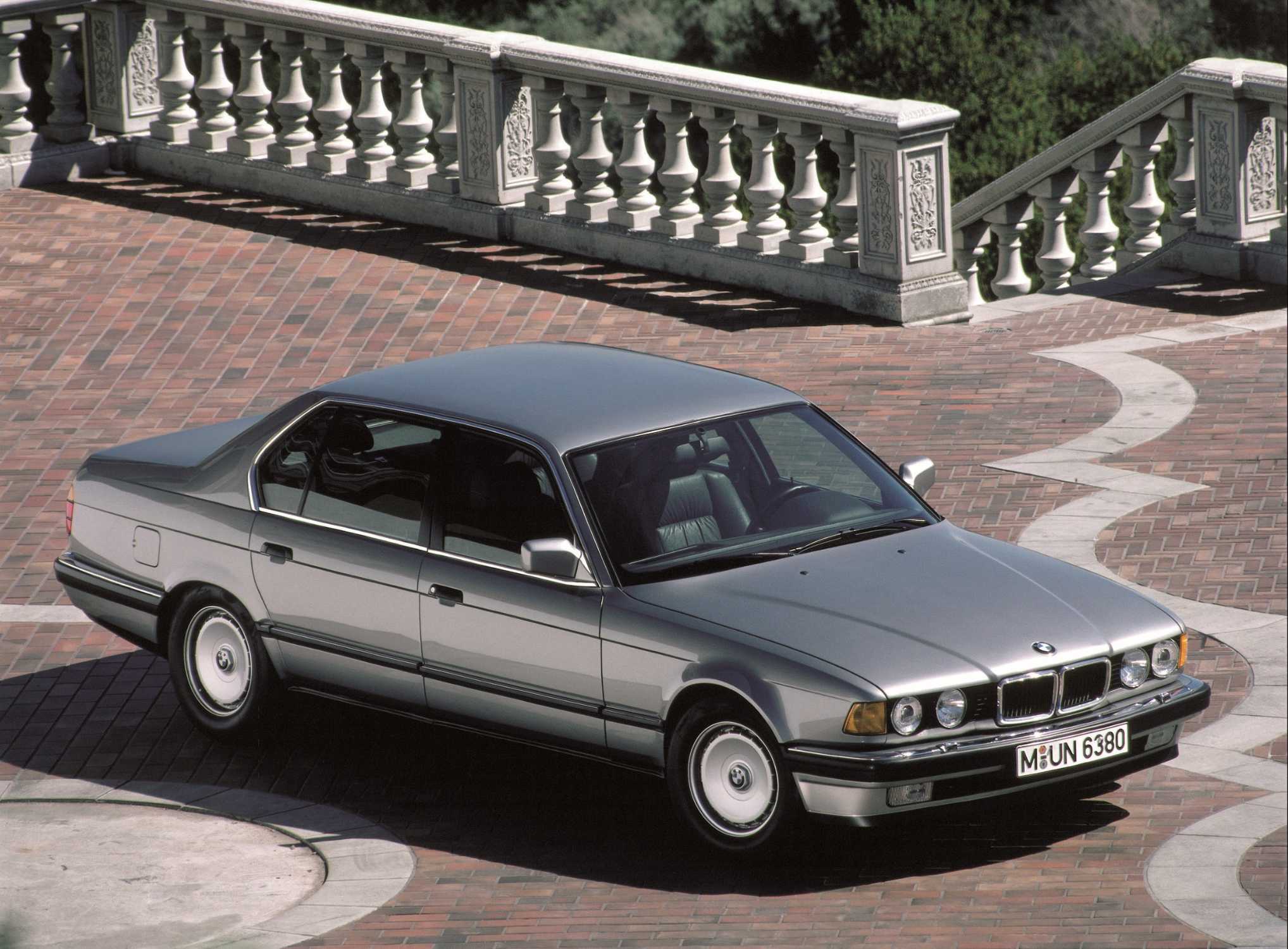
In its first decade after taking over from Max Hoffman, BMW of North America’s automobile sales grew steadily: 26,040 units in 1976, 28,776 in 1977, 31,439 in 1978…and so on, all the way up to 96,759 in 1986.
A newly efficient sales and distribution network contributed greatly to that success, but so did a lack of direct competition in the premium sector. Cadillac and Lincoln offered overstuffed seats and soft suspension. Mercedes and Volvo provided safety and solidity. BMW, by contrast, sold Ultimate Driving Machines, cars that were tasteful, well-engineered, and fun to drive. They were also expensive, and not only because of their inherent value.
Because BMWs were imported from Germany, their prices were subject to currency fluctuations between the Deutschmark and the dollar. Germany’s currency reform of 1950 had set the value of the Deutschmark at 4.2 per dollar, and there it remained for two decades. In 1971, however, the US decoupled the value of the dollar from the price of gold, and the dollar’s value began falling against other currencies in line with US policy. Two years later, one dollar was worth just 2.65 Deutschmarks, and by 1980 the dollar had fallen to DM 1.82. For the next twenty years, the exchange rate would fluctuate wildly, with the dollar trading between DM 2.94 (in 1985) and DM 1.43 per dollar (in 1995).
For BMW, the problem was especially acute in the 1980s. “The late 1980s were a tumultuous time,” said Carl Flesher, BMW NA’s department manager for product planning and market research from 1979 to 1986, and its vice-president of marketing until 1992. The price of a four-door 3 Series, for example, rose from $20,055 in 1986 to $28,400 in 1988—albeit with a higher-revving engine—“and that had only passed on half of what the exchange rate did to the cost of cars being imported to the US,” Flesher said.
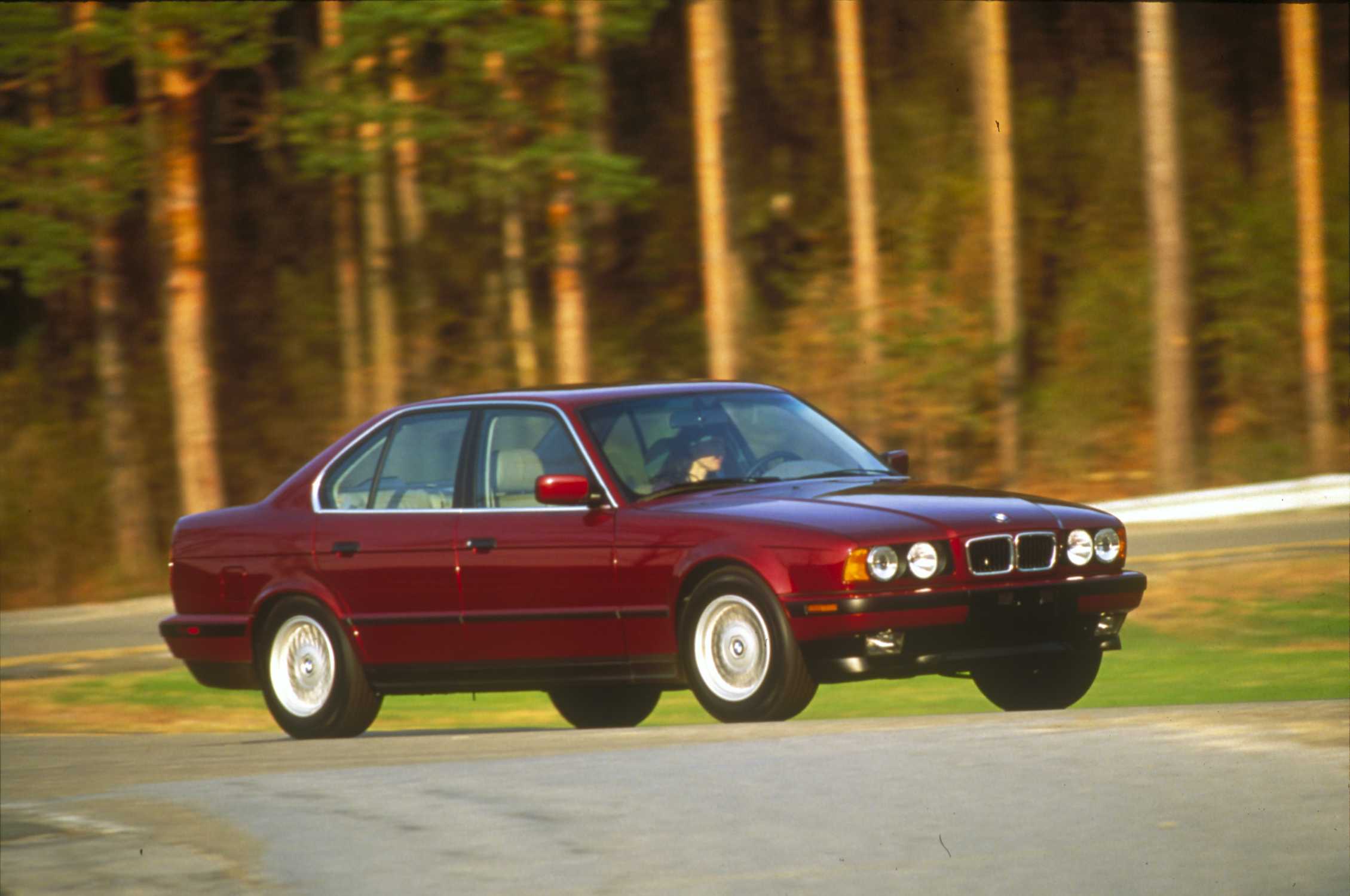
As BMW would discover, price sensitivity wasn’t limited to customers shopping for small cars like the 3 Series. It also affected customers shopping for BMW’s larger sedans.
“The 7 Series with an inline six-cylinder [the 735i, with a 3.4-liter M30 engine] was at $49,500, and the president [Günther Kramer, who also served on the BMW board of management] wanted to take the price up by $5,000,” said Flesher. “I said, ‘I’m as proud of the brand as you are, but that car can’t handle a $55,000 price tag.’ We took the price up, and we went from 13 or 14,000 units a year straight down to 6,000 a year, just like that.”
As BMW’s cars were becoming more expensive to buy, they were also becoming more expensive to own thanks to new technology and increasing service demands. BMW owners—and prospective customers—joked that BMW stood not for Bavarian Motor Works but Break My Wallet. “You’d take your new BMW in for an oil change and the dealer would tell you that you need a Level II service,” said Rich Brekus, a BMW owner since 1979 who joined BMW NA in 1994. “They’d do everything—spark plugs, filters, transmission and differential fluid—even though the car didn’t need it, and you’d have a $1,500 service bill for what should have been a $100 oil change.”
Like all German manufacturers, BMW was vulnerable, and the last thing the company needed was new competition from Japanese manufacturers known for high-quality, reasonably-priced vehicles with low maintenance costs. That’s exactly what BMW got in 1989, when Toyota introduced its new Lexus LS 400 and Nissan launched the Infiniti Q45, both of which followed the successful debut of the Honda-built Acura Legend in 1986. All three Japanese brands were built to compete with German luxury vehicles from BMW and Mercedes. They even seemed to target specific brands, with Lexus mimicking Mercedes and the sportier Infiniti coming after BMW. Ultimately, Lexus would have the greatest impact on the US auto market…and on both BMW and Mercedes.
Toyota had begun developing its upmarket Lexus line in 1983, on the basis of extensive market research into American tastes and driving habits. When the LS 400 debuted at the North American International Auto Show in Detroit in January 1989, it had everything American drivers said they wanted in a premium automobile: a quiet cabin, high build quality, good fuel economy, a comfortable ride, an efficient automatic transmission, and a V8 engine. Lexus’s 4.0-liter V8 was especially attractive, delivering 250 horsepower while sipping fuel and requiring little maintenance. The brand was even marketed with a compelling tagline, “The Relentless Pursuit of Perfection,” created by the Saatchi & Saatchi ad agency.
The LS 400 (and its smaller, sportier ES 250 counterpart) went on sale in August 1989, offered by 100 carefully-chosen dealers from within the Toyota network. With a list price of just $35,000, the LS400 undercut the price of a 5 Series by thousands of dollars, and that of a 7 Series by at least $15,000. Making the car even more attractive, the list price included features like an automatic transmission, power sunroof, tilt steering wheel, and even the anti-lock brakes pioneered by BMW and Mercedes; all but the anti-lock brakes were extra-cost options on the Bavarian car.
The LS400 was well reviewed in the automotive press, and it didn’t take long before Lexus was matching BMW for sales volume. In February 1990, for example, Lexus sold 4,171 cars against BMW’s sales of 4,113 cars. By the end of 1990, Lexus had sold 63,594 cars in the US, narrowly beating BMW’s total of 63,646 cars for the year.
Was Lexus drawing customers away from BMW? Not necessarily, said BMW of North America president Karl Gerlinger, speaking to The New York Times in 1990. “Our studies show that the number of customers leaving us for Lexus or Infiniti are a minority,” Gerlinger said. “They are primarily attracting customers who are moving up from Japanese products or switching from domestic luxury cars. Obviously, that makes it harder in the area of conquest sales, since we want to get customers coming up from Japanese brands or domestics, too. This is the battle we are taking on.”
To succeed, BMW would have to become more aggressive where pricing was concerned, and it would also have to improve its game with respect to customer service—an area where Lexus excelled. As a new brand, Lexus was able to hand-pick its dealers from among the best Toyota dealers, which proved invaluable after two Lexus customers reported problems with the car’s third brake light in December 1989. With no hesitation, Lexus announced a recall of all 8,000 vehicles sold in the US thus far.
“I was in Munich the day Lexus announced its first recall,” McGurn said. “People were giddy. I said, ‘Hold on, let’s see how they handle it. Everyone has recalls.’ Well, they handled it beautifully.”
Indeed, Lexus’s approach to the recall set a new standard for customer care. “They sent a tow truck to the customer’s house to pick up the car and drop off a loaner,” said Larry Demski, then a regional technical specialist for BMW of North America, advising dealers on repairs and other matters. “No one had ever done that, and it changed the whole dynamic of the industry.”
In just 20 days, Lexus had replaced all of the defective parts on every LS 400 in the US. And when the warranty work was complete, the cars were returned to their owners not only repaired but clean. “I think washing cars at service was something Lexus pioneered,” said Brekus. “BMW didn’t do that. Mercedes didn’t do that. You’d get your car back just as dirty as you’d left it, sometimes dirtier. Lexus was giving you what looked like a brand-new car again.”
In response to that particular challenge from Lexus, BMW of North America worked with its dealers to improve customer-service practices. “We had dedicated people who would make sure the dealers had the right tools in place: the training, the focus on the customer. We made a concerted effort to make sure the dealer was representing the brand the way the brand should be represented.”
Lexus’s low maintenance costs posed another challenge. To counter its Break My Wallet reputation, BMW began including scheduled maintenance in the purchase price of every new automobile, ensuring that no additional charges would be incurred during a customer’s first four years or 50,000 miles of ownership.
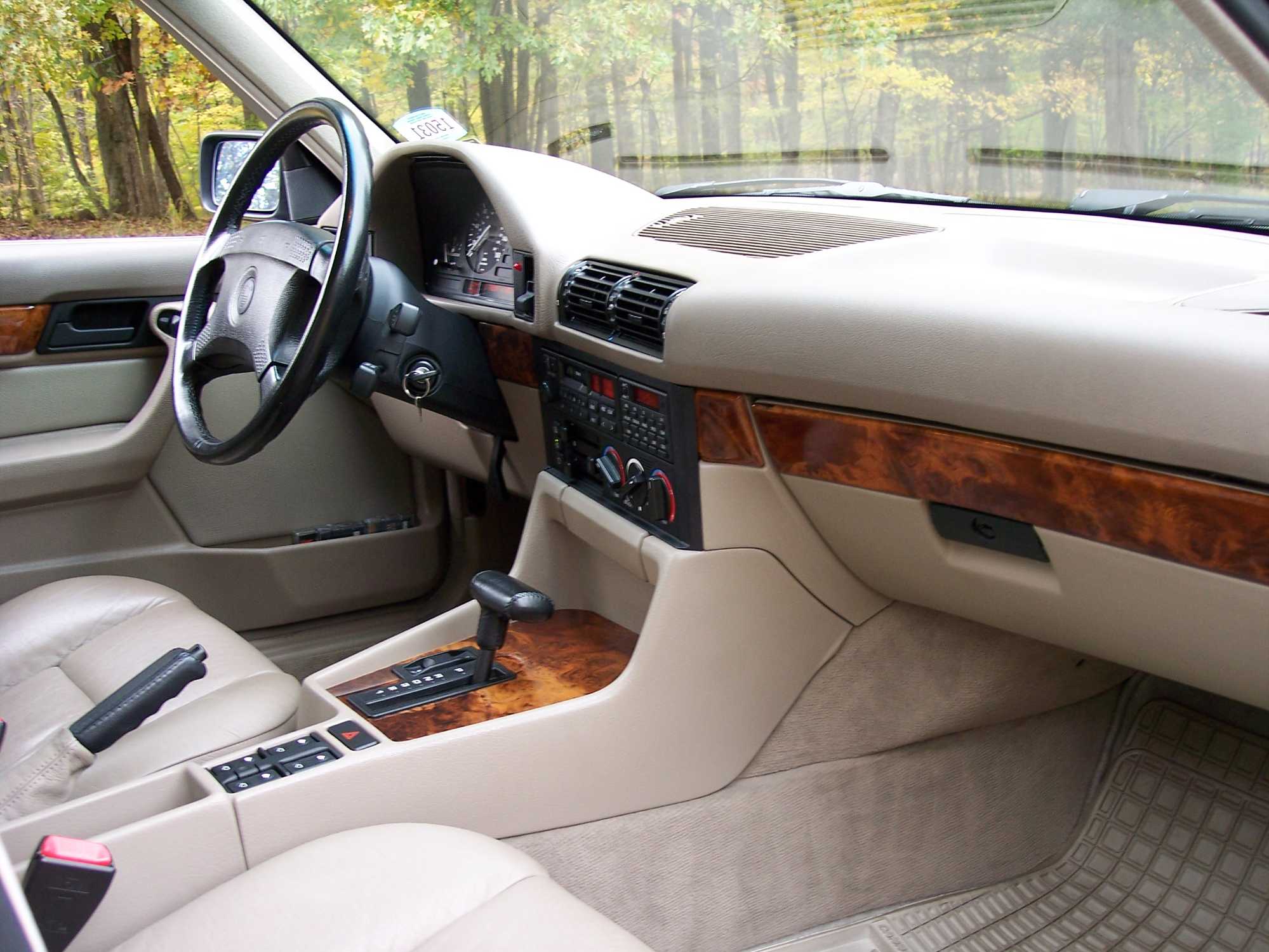
More deeply, BMW recognized the need to improve the reliability of its vehicles in order to compete with the trouble-free operation of the Toyota product. “The cars were billed as the Ultimate Driving Machine, but they didn’t drive!” Demski said. “In the late ’80s, when the E30 3 Series launched, we must have had 20 or 30 cars that broke in the parking lot. That’s where the quality was.”
Since Lexus had a much larger footprint in the US than in Europe, the challenge of bringing BMW up to par with its new Japanese competitors was led by Gerlinger. A veteran BMW executive who’d been in charge of BMW’s export markets during the Hoffman era, Gerlinger had succeeded Günther Kramer as BMW of North America’s president and CEO in August 1989, just as Lexus was arriving on the scene.
“Gerlinger was an enthusiast who enjoyed cars, and he had a very good product sense,” McGurn said. “The marketing became more challenging because of Lexus, but he made some pricing and strategic moves to turn sales around when it was in the troughs. That took quite a lot of negotiation with Munich.”
For the 1991 model year, BMW re-introduced the four-cylinder 3 Series after a six-year absence, offering the 318i to price-conscious customers for $21,500. With a new 1.8-liter M42 engine under its hood, the 318i delivered a respectable 134 horsepower, and those who wanted more could spend $24,650 to get the six-cylinder 325i with168 horsepower. At the other end of the spectrum, BMW introduced the V12-powered 850i, a technical tour-de-force with dramatic styling priced at just over $90,000 upon its introduction in 1991.
That car wouldn’t help BMW compete with Lexus, and neither did the lower-priced 318i with immediate effect. In 1991, sales fell to a dismal 53,343 units.
“The Japanese were really cleaning our clock, to be honest,” said Victor Doolan, who joined BMW of North America from BMW Canada at the end of 1991. “They had really good products—the LS400, the Acura Legend, even the Infiniti Q45—that were really better value and more reliable, and their dealer network was well-structured.”
It would take a strong product initiative as well as a significant improvement in customer service to regain the sales lost to such unexpectedly strong competition from Japan. BMW of North America was no stranger to competition, and the company accepted the challenge to improve its products, its pricing, and its business practices. In 1992, sales rose to 65,683, starting an upward trajectory that would continue for nearly two decades on the strength of attractive automobiles, an increased investment in the US market, and a dedicated dealer network that put the customer first.
—end—